

Reframing AI in Customer Service
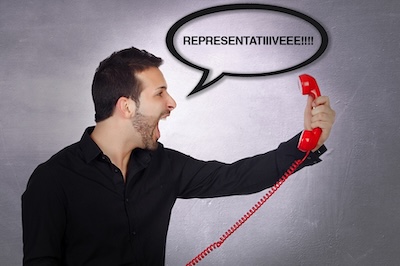
There is a target fixation about replacing humans with AI in the current business climate. In customer service, this was tried many times since 2015. What we learned is this; if an AI application is seen as a better option than the default one by the customers, then it is adopted successfully. If the AI is seen as an obstacle between the customer and the live agent, then it creates frustration and discontent.
What is Reframing?
Reframing in behavioural science is presenting an idea, a situation or an application with a different perspective. If it rains and you get wet, you may feel negative about rain. But if you are told that water reserves and the farmers desparately need rain, you may feel positive even though you got wet.
Reframing AI in Customer Service is very important for its success. If your customers think that "this company could have hired more agents to answer my question, I have an unusual situation here." Then, they will not be happy with your AI bot. But if your AI Voice Assistant is a smart helper to avoid hours of internet search and lots of trials and errors with youtube videos, you are basically saving their time and money.
Just to give you an example; your customer has a problem with the dishwasher. It's not cleaning well on the top shelf. If you have sticker on the side of the machine to your AI Voice Assistant helpline number, they will call your number and with the help of specially trained voice assistant, they will save time and money. They will avoid calling the technical service, will not spend hours on youtube and even probably give up on the idea that they should buy a new one from another brand. That is the power of reframing.
AI Best Practices in Customer Service
There are two main use cases for AI in customer service;
- using AI as a self-service application in customer-facing solutions such as AI Chatbots and AI Voice Assistant
- using AI as a co-pilot to the customer service reps AI Agent Assist, workforce management experts and business analysts.
On the customer-facing AI applications, the rule of thumb is this; AI must be a better option than the default one. For example;
- Use AI Voice Assistant as an option while the caller is waiting in the queue. They will not lose their position in the queue. AI is a better alternative than the hold music, so even if the AI fails, customer has not lost their position in the queue for a live agent.
- Use AI for the product support, new product registration, customer onboarding; the alternative is to go to a PC and fill a form or do endless youtube searches on the Internet. AI Voice Assistant as a product support line is a better option than long searches online; it is a conversational AI to help the user to avoid reading the manual.
- Use AI Voice Assistant for post-call surveys and customer feedback; instead of long, canned questions or a single but difficult question such as Net Promoter Score, AI Voice Assistant helps customer to clearly explain the situation and potential recommendations. This feedback will be converted to a call transcript and handled in the AI Knowledge Base. It will either be added to a known issue or a new issue or a new customer suggestion will be generated.
- Use AI Voice Assistant for out of hours coverage; in this case AI is a better option than waiting until the customer service opens which might be hours or days away.
Click here to learn more about AI use cases in customer service, how they are done, how to implement and data privacy best practices.
Conclusion
AI applications can be very helpful for your customer service operations. However, we always have to make sure that behavioural science best practices are applied into the AI applications. What customers say and do are different in many cases. Behavioural science offers some rules that do not make logical sense but still work. Comstice can help you to implement AI customer service applications into your business while managing customer perception and sentiment.